Are Axolotls Legal in California? (Statute, Permits & the 2025 Federal Rule)
No. California restricts the entire genus Ambystoma as a detrimental species under 14 CCR 671, and no permit category allows keeping one as a pet. The exact clause, who can hold a permit, the penalties, and the 2025 federal salamander rule that also applies.
- Published
- 24 July 2026
- Length
- 19 min read
- Section
- Guides
- Sourcing
- Primary statutes and agency rules
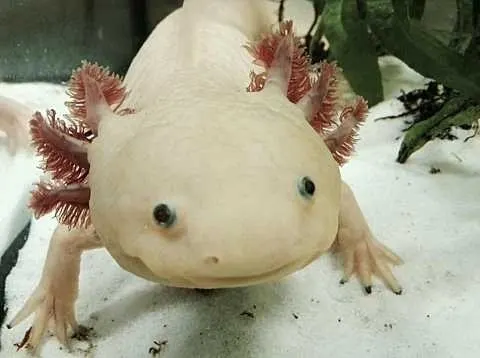
Restricted — detrimental (D) Axolotl ( Ambystoma mexicanum ) in California
- Statewide status — Prohibited. Listed at
14 CCR § 671(c)(3)(C)1.as “Genus Ambystoma (nonnative tiger salamander group)––(D)”. Section 671(a) makes it unlawful to import, transport or possess any animal on that list without a departmental permit. - What “(D)” means — Section 671(b) defines it: species listed “because they pose a threat to native wildlife, the agriculture interests of the state or to public health or safety” are “detrimental animals”. The regulation gives no axolotl-specific reason beyond that category.
- Pet permit? — None exists. The twelve permit types in § 671.1(b) are Animal Care, Aquaculture, AZA, Breeding, Broker/Dealer, Exhibiting, Native Species Exhibiting, Nuisance Bird Abatement, Research, Shelter, Single Event Breeding, and Fish. No category authorises private pet keeping.
- Grandfathering? — Closed. The only permit resembling private possession — Animal Care — is limited to a resident “who legally possessed the animal in California prior to January 1992.”
- Penalty —
Fish & Game Code § 2125(a): a civil penalty of $500 to $10,000 per violation, plus a misdemeanor punishable by up to six months in county jail or a fine of up to $1,000. Seizure of the animal is also possible. - Federal layer — The genus Ambystoma was added to the injurious-wildlife list at
50 CFR § 16.14(a)on 10 January 2025, effective 25 January 2025 — a salamander-chytrid (Bsal) measure that applies nationwide, not just in California. - Last verified — 2026-07-25
The answer, activity by activity
| What you want to do | Status in California | Governing law |
|---|---|---|
| Keep an axolotl as a pet at home | Banned | 14 CCR § 671(a) + § 671(c)(3)(C)1. |
| Buy one from an out-of-state breeder and have it shipped in | Banned — importation is the first verb in § 671(a) | 14 CCR § 671(a) · Fish & Game Code § 2118 |
| Move to California already owning one | Banned — no grandfather clause | 14 CCR § 671.1(b)(1) (pre-1992 possession only) |
| Apply for a pet permit | No such category | 14 CCR § 671.1(b) |
| Hold them at a university or research institution | Permit — Research permit | 14 CCR § 671.1(b)(9) |
| Display them at an AZA-accredited zoo or aquarium | Permit — AZA permit | 14 CCR § 671.1(b)(3) |
| Keep one in a school classroom | Banned in practice — the Exhibiting permit requires being in the business of exhibiting animals at least half-time | 14 CCR § 671.1(b)(6) |
| Release one into a pond, creek or storm drain | Banned — and the most serious version of the offence | Fish & Game Code § 2118 (“release alive into this state”) |
The proof, not the assertion: five links in the chain
Almost every page answering this question says “axolotls are illegal in California under Section 671” and stops. That is the right answer with the wrong amount of work shown — and it leaves readers unable to check anything, or to see the trap that catches people who do go and read the law. Here is the whole chain, in order.
| # | The provision | What it does |
|---|---|---|
| 1 | Fish & Game Code § 2116 | Defines “wild animal” to include any animal “of the class Amphibia (frogs, toads, salamanders) … which is not normally domesticated in this state as determined by the commission.” The definition is delegated, not fixed — that matters at step 3. |
| 2 | Fish & Game Code § 2118 | “It is unlawful to import, transport, possess, or release alive into this state, except under a revocable, nontransferable permit … any wild animal of the following species.” Subdivisions (i) and (k) let the Commission add “classes, families, genera, and species in addition to those listed in this section … by commission regulations.” |
| 3 | 14 CCR § 671(b) | The Commission makes the § 2116 determination: “The commission has determined the below listed animals are not normally domesticated in this state.” It then defines the two letters: “W” for welfare animals, “D” for species that “pose a threat to native wildlife, the agriculture interests of the state or to public health or safety.” |
| 4 | 14 CCR § 671(c)(3)(C)1. | Under “(3) Class Amphibia––Frogs, Toads, Salamanders”, subheading “(C) Family Ambystomatidae––Mole Salamanders”: “Genus Ambystoma (nonnative tiger salamander group)––(D)”. This is the operative line. |
| 5 | 14 CCR § 671(a) | “It shall be unlawful to import, transport, or possess live animals restricted in subsection (c) below except under permit issued by the department.” Permits issue only for the purposes in § 671.1. |
The trap: reading the statute alone gives the wrong answer
Fish & Game Code § 2118 contains its own species list, and its Class Amphibia entry is startlingly short. In full, it reads:
“Class amphibia (frogs, toads, salamanders) — Family Bufonidae (toads) — Giant toad or marine toad, Bufo marinus”
One toad. Nothing else. A careful reader who checks only the statute will conclude that California’s legislature never restricted salamanders at all — and will be wrong, because § 2118(k) hands the Commission power to add genera by regulation, and the Commission used it. Subsection (c)(3)(C) of Section 671 was filed and made operative on 27 February 2001, and the Ambystoma line itself was last amended effective 1 April 2017. That is why the ban lives in the California Code of Regulations, not in the Fish and Game Code, and why “it’s not in the code” arguments fail.
A detail that only shows up if you read Section 671(b) closely
Section 671 sorts restricted animals into two categories, and the definitions are not symmetrical. The welfare category is written for one class only:
“Mammals listed to prevent the depletion of wild populations and to provide for animal welfare are termed ‘welfare animals’, and are designated by the letter ‘W’. Those species listed because they pose a threat to native wildlife, the agriculture interests of the state or to public health or safety are termed ‘detrimental animals’ and are designated by the letter ‘D’.”
“W” is defined for mammals; “D” is defined for species generally. An amphibian therefore cannot be a welfare listing under the regulation as written — the only available designation is detrimental. This is worth knowing because the (W)/(D) distinction is genuinely load-bearing elsewhere on California’s list: sugar gliders are (W), which is why calling them “invasive” is wrong, while hedgehogs and ferrets are (D). For the axolotl, the “(D)” tells you less than people assume. It is the only box the regulation has for an amphibian. See our sugar glider guide for the contrast in full.
Does “nonnative tiger salamander group” really cover an axolotl?
Yes, on either reading of the clause, and it is worth being precise about why because this is the one place a good-faith argument could be attempted.
- The operative words are “Genus Ambystoma.” The listing is taxonomic and genus-wide. Ambystoma mexicanum is in the genus. That alone decides it.
- The parenthetical is a descriptive gloss, and it still fits. “Nonnative tiger salamander group” excludes California’s own native species — the California tiger salamander, Ambystoma californiense, which is protected separately as native wildlife rather than restricted as an exotic. The axolotl is native to Mexico, not California, and sits inside the tiger salamander complex taxonomically. It is nonnative and it is Ambystoma.
- Captive breeding is irrelevant. Section 2116 defines a wild animal by whether the species is “normally domesticated in this state as determined by the commission,” and § 671(b) records the Commission’s determination that every listed animal is not. A tenth-generation captive-bred leucistic axolotl from a hobbyist line is the same listed genus as any other.
- Colour morphs are not separate animals. Wild-type, leucistic, albino, melanoid, copper and GFP axolotls are all Ambystoma mexicanum.
California’s entire restricted amphibian list is four entries
Because § 671 works as a closed restricted list rather than an approved list, it is possible to show the whole amphibian section — something no competing page does. Class Amphibia in Section 671(c)(3) contains exactly four entries:
| Section | The listing, verbatim | In plain terms |
|---|---|---|
(c)(3)(A)1. | Family Bufonidae––Toads: “Genera Rhinella and Rhaebo (formerly Bufo) (giant/marine toad group and all other large toads from Mexico and Central and South America)––(D)” | Cane toads and their relatives |
(c)(3)(B)1. | Family Pipidae––Tongueless Toads: “Genus Xenopus (clawed frogs)––(D)” | African clawed frogs |
(c)(3)(C)1. | Family Ambystomatidae––Mole Salamanders: “Genus Ambystoma (nonnative tiger salamander group)––(D)” | Axolotls and nonnative tiger salamanders |
(c)(3)(D)1. | Family Eleutherodactylidae––Rain Frogs: “Eleutherodactylus coqui––common coquí or coquí––(D)” | The coquí frog |
Do not read that table as “every other amphibian is legal.” Section 671 is only one of three layers. California’s native reptiles and amphibians are governed separately by the sport-fishing and native-species rules, and the federal salamander rule described below restricts thirty-six salamander genera for import and shipment regardless of state law. Absence from § 671 means “not a restricted exotic,” not “unregulated.”
Permits: what exists, and who can actually hold one
Section 671.1(b) lists twelve permit types. Four could conceivably touch an axolotl, and the eligibility wording is what decides the question:
| Permit | Who it is issued to (regulation’s words) | Could a private keeper get it? |
|---|---|---|
§ 671.1(b)(9) Research | “any university, college, governmental research agency, or other bona fide scientific institution, as determined by the department, who engages in scientific or public health research” | No — institutional only |
§ 671.1(b)(3) AZA | “any person accredited by the Association of Zoos and Aquariums (AZA) and who is in the business of exhibiting and breeding animals” | No |
§ 671.1(b)(6) Exhibiting | “any person who is a resident or nonresident who is in the business of exhibiting animals at least half-time, for commercial and/or educational purposes” | No — the half-time business test rules out a teacher or hobbyist |
§ 671.1(b)(1) Animal Care | “any person who is a resident and who has the demonstrated experience and ability to care for and house an animal, and who legally possessed the animal in California prior to January 1992” | No — a closed historic class |
The Animal Care line is the one worth dwelling on, because it is the closest thing California has to a private-possession permit and it is the reason “just get a permit” advice is wrong. It requires lawful possession in California before January 1992. Nobody acquiring an axolotl today can satisfy it, and the Animal Care permit authorises “no other activity … except that which is medically necessary for the care of the animal” — no breeding, no sale, no transfer. The same structural point applies to ferrets and hedgehogs: California’s restricted-species scheme simply has no pet tier. Our exotic pet permits explainer covers how that compares with permit states, and the glossary defines the terms.
- 4 entries in California’s entire restricted amphibian list — the axolotl’s is one of them
- 0 of the 12 restricted-species permit categories that allow private pet keeping
- 2001 the year the mole-salamander subsection was added to Section 671
Penalties
Fish & Game Code § 2125(a) sets a two-track penalty, and both tracks can apply to the same act:
“In addition to any other penalty provided by law, any person who violates this chapter or any regulations implementing this chapter, is subject to a civil penalty of not less than five hundred dollars ($500) nor more than ten thousand dollars ($10,000) for each violation. Except as otherwise provided, any violation of this chapter or of any regulations implementing this chapter is a misdemeanor punishable by imprisonment in a county jail for not more than six months, or by a fine of not more than one thousand dollars ($1,000).”
Note “for each violation” — a tank of six animals is not obviously one violation. In practice, the realistic outcome for an ordinary keeper discovered with a single axolotl is seizure of the animal rather than a five-figure penalty; enforcement is complaint-driven and typically surfaces through a shipment interception, a retail inspection or a neighbour. Section 671(a) also reminds readers that “cities and counties may also prohibit possession or require a permit,” so a local ordinance can sit on top of the state ban but never below it.
Why the ban exists — and why the usual explanation is only half right
First, what the law itself says: nothing specific. Section 671 gives one reason for every “(D)” listing — that the species poses a threat to native wildlife, agriculture, or public health or safety. It does not name the axolotl, does not mention hybridisation, and does not explain the mole-salamander line. Anything beyond that generic category is context, not law, and we mark it as such.
The context, clearly labelled as context. California has a real, documented, decades-old problem with introduced Ambystoma — but not with axolotls. Barred tiger salamander larvae (Ambystoma tigrinum mavortium) were brought into the Salinas Valley by bait dealers “interested in selling salamander larvae to bass fishermen,” in the words of Fitzpatrick and Shaffer’s 2007 study in the Proceedings of the National Academy of Sciences. The introduction happened roughly 50 to 60 years before that paper — the late 1940s to the 1950s — and the introduced salamanders have been hybridising with the native California tiger salamander (Ambystoma californiense) ever since, with some hybrid genotypes outperforming both parents. The California tiger salamander is federally listed. A genus-wide restriction is a blunt but coherent response to that history, and the timing fits: the mole-salamander subsection entered Section 671 in February 2001, the period when the California tiger salamander’s population segments were being federally listed.
Where competing pages overreach. Nearly every article on this topic states, as fact, that axolotls are banned in California “because they would hybridise with the California tiger salamander.” That is an inference. The documented hybridisation involves the barred tiger salamander, a hardy terrestrial-breeding species that was released by the bucketload into exactly the right habitat. The axolotl is an obligate neotenic aquatic species from a single Mexican lake system. Whether a released pet axolotl could establish, let alone interbreed, in a California vernal pool is a scientific question we have seen no primary source resolve. The honest description of the law is simpler and stronger: California restricted the genus, and the axolotl is in the genus. No axolotl-specific finding was ever needed.
The federal layer almost nobody mentions
This part applies wherever you live, and it is new enough that most axolotl pages predate it. To slow the spread of Batrachochytrium salamandrivorans — the salamander chytrid fungus, not yet known to occur in the United States — the U.S. Fish and Wildlife Service listed salamanders as injurious wildlife under the Lacey Act. The current codified list at 50 CFR § 16.14(a) covers “all species in the genera Ambystoma, Andrias, Aneides …” and thirty-three more, and the credit line records the history: 81 FR 1554 (13 January 2016), “as amended at 90 FR 2221, Jan. 10, 2025.” The 2025 action — published 10 January 2025 and effective 25 January 2025 — finalised the original twenty genera and added sixteen more that recent studies found also carry the fungus. Ambystoma is in that second group.
The Service’s own summary of what the listing prohibits is precise about geography: “the importation into the United States and shipment between the continental United States, District of Columbia, Hawaii, Commonwealth of Puerto Rico, or any territory or possession of the United States … except by permit for certain purposes or by Federal agencies solely for their own use.” The permit provision, 50 CFR § 16.22, allows importation or shipment between those jurisdictions only “for zoological, educational, medical, or scientific purposes.”
Two things about the federal rule we could not confirm from primary text, and will not assert. (1) Whether it reaches an ordinary shipment from one continental state to another: the listed units are the continental United States as a whole, DC, Hawaii, Puerto Rico and the territories, and the D.C. Circuit is reported to have held in United States Association of Reptile Keepers, Inc. v. Zinke, 852 F.3d 1131 (2017), that the Lacey Act’s shipment clause does not cover movement between the 49 continental states — but every full-text source for that opinion, and the Service’s own implementation page, refused automated retrieval from our servers, so we flag the point verify rather than state it. (2) Whether the Ambystoma addition is now final or still in its interim-rule comment stage. Neither uncertainty affects the California answer, which rests entirely on state law. If you are shipping or importing salamanders, confirm both with the U.S. Fish and Wildlife Service before relying on anything here.
Five claims about California axolotls that do not survive the regulation
- “You can get a permit if you’re an experienced keeper.” The permit that mentions demonstrated experience is Animal Care, and its second condition is possession in California before January 1992. Experience without that date is not a route.
- “Captive-bred ones are fine — the law is about wild-caught animals.” Section 2116 makes the test whether the species is normally domesticated in California as determined by the Commission, and § 671(b) is that determination. Provenance is not a defence.
- “It’s only illegal to sell them, not to own one.” Section 671(a) prohibits possession by name, alongside importation and transportation.
- “Salamanders aren’t in the Fish and Game Code, so it can’t really be banned.” Correct premise, wrong conclusion — § 2118’s amphibian entry names only the marine toad, but § 2118(k) authorises the Commission to add genera by regulation, and the mole-salamander subsection was added in 2001.
- “California banned axolotls because they’re endangered.” The axolotl’s conservation status in Mexico has nothing to do with the mechanism here. Section 671 is a restricted-species regulation about risk to California, not a protective listing. Conflating the two produces confident, wrong advice about what a permit would even be for.
If you already have one, or are moving to California
There is no grandfather clause, no registration and no amnesty for an animal acquired after January 1992, so a move into California means rehoming the animal in a state where it is lawful before you go. Rehoming through a hobbyist community or a rescue in your current state is the realistic path.
Whatever you do, do not release it. Release alive is prohibited by Fish & Game Code § 2118 in its own right, and it is the single act the entire restricted-species scheme exists to prevent — the Salinas Valley hybridisation described above began with exactly that. The same principle underlies California’s other headline bans; see our full California exotic pet law hub for the complete banned and legal lists.
Frequently asked questions
Are axolotls illegal in California?
Yes. 14 CCR § 671(c)(3)(C)1. restricts “Genus Ambystoma (nonnative tiger salamander group)” as a detrimental species, and § 671(a) makes it unlawful to import, transport or possess a restricted animal without a departmental permit. The pet axolotl, Ambystoma mexicanum, is a nonnative member of that genus.
Can you get a permit to own an axolotl in California?
Not as a pet. Section 671.1(b) creates twelve permit categories, and the ones that could cover an axolotl are institutional: Research (universities, colleges, government research agencies and other bona fide scientific institutions), AZA (accredited zoos and aquariums), and Exhibiting (people in the business of exhibiting animals at least half-time). The Animal Care permit is limited to animals legally possessed in California before January 1992.
What is the penalty for owning an axolotl in California?
Fish & Game Code § 2125(a) provides a civil penalty of $500 to $10,000 for each violation, and makes the violation a misdemeanor punishable by up to six months in county jail or a fine of up to $1,000. The animal can also be seized. Enforcement is complaint-driven in practice.
Why are axolotls banned in California?
The regulation gives only the generic reason attached to every “(D)” listing: a threat to native wildlife, agriculture, or public health or safety. The widely repeated hybridisation explanation is context rather than law — the documented California problem is introduced barred tiger salamanders, released by bait dealers in the Salinas Valley in the mid-twentieth century, hybridising with the federally listed California tiger salamander. The restriction is written at genus level, so the axolotl is covered without any axolotl-specific finding.
Is it legal to have an axolotl shipped to California?
No. Importation is the first act prohibited by § 671(a) and by Fish & Game Code § 2118. Separately, the federal injurious-wildlife listing at 50 CFR § 16.14(a) now covers the whole genus Ambystoma, restricting importation into the United States and shipment between the continental United States, DC, Hawaii, Puerto Rico and the territories except under a § 16.22 permit.
Which other exotic pets are banned in California?
The best-known statewide bans are ferrets, sugar gliders, hedgehogs, raccoons and skunks, all under the same Section 671 restricted list. Our California hub has the full banned and legal tables; browse other states from the state index and other animals from the species index.
Sources & verification
Every California status above is pinned to the primary text below and read directly from it, not paraphrased from another site. The two items flagged “verify” are both federal and both stated as unconfirmed in the text. Last verified: 2026-07-25. Laws change; if you spot an error, tell us and see our editorial & sourcing policy.
- 14 CCR § 671 — Importation, Transportation and Possession of Live Restricted Animals; subsection (a) prohibition, (b) welfare/detrimental definitions, (c)(3) Class Amphibia including (C)1. Genus Ambystoma, and the amendment history dating subsection (c)(3)(C) to 27 February 2001 and its last amendment to 1 April 2017. Cornell LII. Primary regulation.
- 14 CCR § 671.1 — Permits for Restricted Species; subsection (b) permit categories, including Animal Care (pre-January 1992 possession), AZA, Exhibiting and Research eligibility wording. Cornell LII. Primary regulation.
- California Fish & Game Code § 2116 — definition of “wild animal,” including class Amphibia and the “not normally domesticated in this state as determined by the commission” test. leginfo.legislature.ca.gov. Primary statute.
- California Fish & Game Code § 2118 — unlawful to import, transport, possess or release alive; the Class Amphibia entry naming only Bufo marinus; subdivisions (i) and (k) authorising the Commission to add genera by regulation. leginfo.legislature.ca.gov. Primary statute.
- California Fish & Game Code § 2125 — civil penalty of $500–$10,000 per violation and misdemeanor exposure of up to six months or $1,000. leginfo.legislature.ca.gov. Primary statute.
- California Department of Fish and Wildlife — Restricted Species licensing programme. wildlife.ca.gov. State agency.
- 50 CFR § 16.14 — Importation of live or dead amphibians or their eggs; injurious listing of all species in thirty-six salamander genera including Ambystoma, with the credit line “[81 FR 1554, Jan. 13, 2016, as amended at 90 FR 2221, Jan. 10, 2025].” Cornell LII. Primary federal regulation.
- 50 CFR § 16.22 — permits for importation or shipment of injurious wildlife between the continental United States, DC, Hawaii, Puerto Rico or a U.S. possession “for zoological, educational, medical, or scientific purposes.” Cornell LII. Primary federal regulation.
- U.S. Fish and Wildlife Service, “Injurious Wildlife Species; Listing Salamanders Due to Risk of Salamander Chytrid Fungus,” 90 FR 2170 (10 January 2025), effective 25 January 2025 — affirming the 2016 listing of 20 genera as final and adding 16 further genera by interim rule. federalregister.gov. Primary rule — the HTML page blocks automated requests from our servers, so the citation, effective date and summary language were verified through the Federal Register’s public API record for the same document.
- Benjamin M. Fitzpatrick & H. Bradley Shaffer, “Hybrid vigor between native and introduced salamanders raises new challenges for conservation,” PNAS 104:15793–15798 (2007) — the bait-dealer introduction of barred tiger salamanders into the Salinas Valley 50–60 years before publication and their hybridisation with the California tiger salamander. PubMed Central. Peer-reviewed research, cited here as context rather than law.
Informational only — not legal advice. The California conclusion on this page rests on regulatory and statutory text we read directly, and it is unambiguous. Two federal points are expressly unconfirmed: whether the Lacey Act shipment clause reaches movement between continental states after USARK v. Zinke, and whether the January 2025 addition of the genus Ambystoma has since been finalised. Confirm those with the U.S. Fish and Wildlife Service, and confirm any city or county rule with your local clerk, before acting. Last verified: 2026-07-25.