Skunk Legal States: Can You Have a Pet Skunk? (50-State Table)
Where is it legal to own a pet skunk? A statute-cited 50-state table of skunk legality, plus the permit rules, the rabies gap, and the skunk-legal lists that get it wrong.
- Published
- 22 July 2026
- Length
- 18 min read
- Section
- Species
- Sourcing
- Primary statutes and agency rules
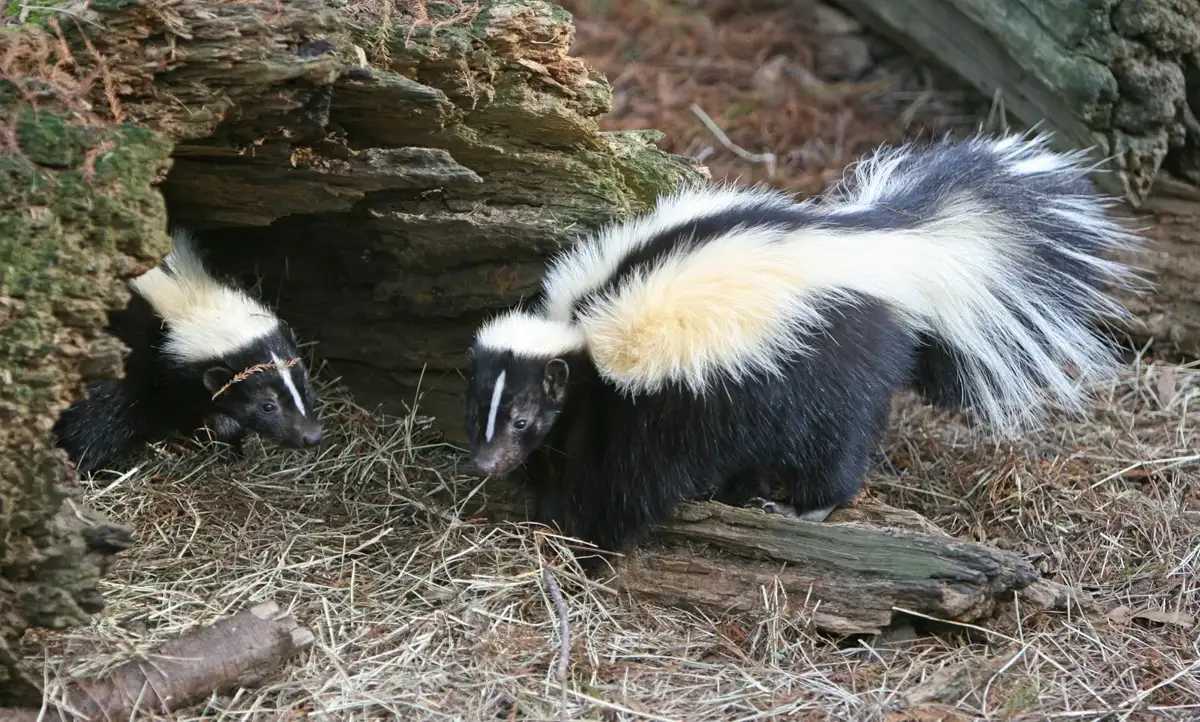
Because the skunk is a native animal across most of the United States and a top carrier of rabies, its legality is written into each state’s wildlife, game, or public-health code — not the “exotic pet” lists that govern servals or sugar gliders. That combination is why most states forbid keeping one as a pet outright, and why the handful that allow it almost always require a permit and a captive-bred animal. The domesticated pet skunk (descented, captive-bred, sold by licensed breeders) is a real animal with a devoted following — but its legal footprint is far smaller, and far more conditional, than hobby sites suggest. Below is the current status in all 50 states and D.C., each tied to the statute or rule behind it, followed by the specifics that trip people up: California, the true no-permit and permit states, and the widely copied “skunk-legal” lists that are simply incorrect.
Varies Striped skunk (Mephitis mephitis)
- Legal framework — State wildlife / game codes and public-health (rabies-control) rules — not non-native exotic-species lists. Federal law does not restrict private skunk ownership; the rules are entirely state-level.
- Most permissive — South Dakota — no permit, one skunk per household under humane/sanitary conditions (
S.D. Admin. R. 41:08:05:01). - Notable ban — Minnesota — a dedicated public-health statute, “Trafficking in Skunks,” bars importing, acquiring, selling or buying a live skunk (
Minn. Stat. § 145.365). - Chief restriction driver — Public health: the skunk is a CDC primary rabies-reservoir species, and there is no USDA-approved rabies vaccine for it. Many state bans cite rabies control directly, and some also outlaw descenting or vaccinating a skunk.
- Wild vs. captive — Where a permit exists, most states allow only captive-bred animals from a licensed source and prohibit taking a skunk from the wild.
- Last verified — 2026-07-22
Can you have a pet skunk? The short answer
Owning a pet skunk with no permit is clearly legal in essentially one state: South Dakota, which allows one skunk per household. About fifteen more states allow it only under a wildlife-possession permit or captive-wildlife license — and nearly all of those require the animal to be captive-bred, not caught in the wild. Every other state, plus Washington, D.C., prohibits keeping a skunk as a pet, most often through a rabies-control rule. So while “can you have a pet skunk” has a yes-answer in a few places, for the large majority of Americans the honest answer is no, or not without a permit your state rarely grants to ordinary pet owners. Two extra traps make skunks trickier than most exotics: several states ban importing a skunk even where possession is technically allowed (so you cannot move an out-of-state pet in), and a few outlaw descenting the animal outright. Find your state in the table, then read the note — the conditions matter as much as the yes/no.
Skunk legality by state (all 50 + D.C.)
Legal no permit Permit license required Banned not allowed as a pet Unclear no clear pet pathway; verify. Statuses reflect keeping a captive-bred striped skunk as a personal pet; rehabilitation, exhibition and research permits are separate. Rows marked “verify” are pinned only to the governing agency or framework, not a confirmed section number — treat those as “confirm before you act.”
| State | Status | Governing law | Permit & notes |
|---|---|---|---|
| Alabama | Unclear | Ala. Admin. Code r. 220-2-.26 | Rabies-vector import/possession rule likely bars pet skunks — verify with ADCNR/ADPH |
| Alaska | Banned | 5 AAC 92.029 (clean list) | Skunk not on the permitted-species list; no possession |
| Arizona | Banned | Ariz. Admin. Code § R12-4-406 | Restricted live wildlife (Carnivora); licensed facilities only |
| Arkansas | Banned | AGFC Code 09.14 | Native-pet rule allows only opossum/rabbit/raccoon/squirrel — skunk excluded |
| California | Banned | 14 CCR § 671; Fish & Game Code §§ 2116–2126 | Prohibited detrimental wildlife; no pet permit; descented skunks still banned |
| Colorado | Banned | CPW prohibited-wildlife / rabies-vector rule | Possession of a pet skunk unlawful — confirm exact reg with CPW |
| Connecticut | Banned | Conn. Gen. Stat. § 26-40a | Skunk not on the allowed list — confirm with DEEP |
| Delaware | Permit | 7 Del. Admin. Code 3900 | Live-skunk possession/sale needs a state permit; rarely issued to private owners — verify |
| District of Columbia | Banned | D.C. Code § 8-1808(j); DCMR tit. 24 | Skunk not on the permitted-animal list — verify exact section |
| Florida | Permit | Fla. Admin. Code r. 68A-6.002; r. 68A-6.003(13) | Class III no-fee personal-pet permit; captive-bred only (no wild-take) |
| Georgia | Banned | O.C.G.A. tit. 27 ch. 5 | Skunk not licensable as a pet — confirm exact GA DNR cite |
| Hawaii | Banned | HRS ch. 150A; HDOA prohibited list | No private permit; import carries felony penalties |
| Idaho | Banned | IDAPA 02.04.27 | May not possess/import skunk except USDA exhibitors / fur farms |
| Illinois | Banned | 520 ILCS 5/3.25 | No fur-bearing-mammal breeder permit for skunks acquired after July 1, 1975 — descented ones too |
| Indiana | Permit | 312 IAC 9-11-7(9) | Class II “Striped skunk”; Wild Animal Possession Permit ($20); captive-bred source |
| Iowa | Unclear | Iowa Code § 481A.61 | Not a “dangerous wild animal,” but captive fur-bearers sit under a game-breeder license — NOT a no-permit state; verify with DNR |
| Kansas | Banned | K.A.R. 28-1-14 | Rabies rule; bans pet possession, descenting, and vaccinating a skunk |
| Kentucky | Permit | 301 KAR 2:081 | Native rabies-vector; pathway discretionary and unclear — verify with KDFWR |
| Louisiana | Permit | LDWF captive-wildlife permit | Discretionary permit — confirm exact LDWF rule |
| Maine | Banned | 09-137 CMR / MDIFW | Permit not issued for pet skunks — confirm exact chapter |
| Maryland | Banned | Md. Code, Crim. Law § 10-621 | Skunk expressly listed among prohibited animals |
| Massachusetts | Banned | 321 CMR 9.01; MGL c. 131 § 77A | Skunk not on the exempt list; no license for pets — verify |
| Michigan | Permit | Permit to Hold Game in Captivity; MCL 324.40118 | Captive-bred only; importing a live skunk is separately banned (in-state source required) |
| Minnesota | Banned | Minn. Stat. § 145.365 | “Trafficking in Skunks”: no import, acquire, sell, give or buy a live skunk |
| Mississippi | Banned | MDWFP native-wildlife rules | No personal-possession permit — confirm the rule with MDWFP |
| Missouri | Banned | 3 CSR 10-9.420 | Skunk excluded from the Wildlife Hobby Permit; live skunks may not be imported/bought/sold/transported |
| Montana | Banned | MCA Title 87; FWP rabies-vector rule | Skunk barred as a rabies-vector wild animal — confirm with FWP |
| Nebraska | Banned | Neb. Rev. Stat. § 37-477 | “No person shall keep in captivity … any skunk” (grandfather only pre-1986) |
| Nevada | Banned | NAC 503.110 | Skunk possession/transport prohibited — verify exact subsection |
| New Hampshire | Permit | N.H. Code Admin. R. Fis 804 | Controlled species; discretionary, rarely granted for pets — verify |
| New Jersey | Permit | N.J.A.C. tit. 7 ch. 25 | Captive-game permit; USDA-licensed breeder source, rabies-variant-match sourcing — verify |
| New Mexico | Permit | N.M. Admin. Code § 7.4.2.12 | Health rule: no import or wild capture; permits only for skunks born in captivity |
| New York | Banned | ECL § 11-0512; 6 NYCRR | Skunk is a wild animal; no possession as a pet — verify subsection |
| North Carolina | Unclear | No statewide skunk-pet ban | No statewide prohibition, but imports are restricted (rabies-vector) and cities (e.g. Charlotte) ban them — verify locally |
| North Dakota | Banned | N.D. Admin. Code 48.1-09-01-02(5)(a); NDCC § 36-01-08.4 | No import “for any purpose”; possession prohibited |
| Ohio | Permit | ORC § 1533.71; skunk = fur-bearer (§ 1531.01) | Noncommercial Propagating License; captive-bred/lawful source, up to 4 — verify exact OAC sub-rule |
| Oklahoma | Permit | 29 O.S. § 4-107; OAC tit. 800:25 | Noncommercial Wildlife Breeder’s License (~$10/yr) |
| Oregon | Banned | OAR 635-056-0050 | Skunk (Mephitis spp.) prohibited; only grandfathered animals allowed |
| Pennsylvania | Permit | 58 Pa. Code ch. 147 Subch. N; 34 Pa.C.S. § 2963 | Requires documented 2 years hands-on experience — not a no-permit state |
| Rhode Island | Banned | RI DEM permit (not issued) | Rabies-vector; no pet permit issued — confirm exact rule |
| South Carolina | [Legal]* | S.C. Code § 47-5-50; § 47-5-60 | *Only a skunk caught wild in South Carolina; importing any skunk is banned |
| South Dakota | Legal | S.D. Admin. R. 41:08:05:01 | No permit; one skunk per household (humane/sanitary); import permit if brought from out of state |
| Tennessee | Permit | T.C.A. § 70-4-403 (Class II) | Class II native personal-possession permit — verify fee |
| Texas | Banned | 25 Tex. Admin. Code § 169.34 | Statewide rabies quarantine — illegal to possess or transport any skunk |
| Utah | Banned | Utah Admin. Code R657-3 (R657-3c-5) | Skunk (Mephitidae) prohibited for collection/import/possession |
| Vermont | Banned | 10 V.S.A.; VT F&W “unlisted = prohibited” | Skunk not on the allowed list — verify |
| Virginia | Banned | Va. Code §§ 29.1-521 & 29.1-103 | Unlawful to possess a wild animal without a permit; none issued for pets — verify |
| Washington | Banned | WAC 220-640-200; WAC 246-100-197 | Deleterious-exotic + rabies-vector rules bar possession |
| West Virginia | Banned | W. Va. Code § 20-2-5; WVDNR policy | Permit exists on paper, but no import permits issued since 2001 and no pet permits since 2006 — de facto ban |
| Wisconsin | Permit | Wis. Stat. § 169.04; NR 16 | Captive Wild Animal Farm license; captive source only; descenting only by a licensed farm/vet |
| Wyoming | Permit | WY G&F Reg. ch. 10 | Permit to import/possess live wildlife; often mislabeled “no-permit” — verify |
- 1 state clearly allows a pet skunk with no permit — South Dakota
- 15 states allow one only with a wildlife permit or license
- 30 + DC states ban pet skunks (incl. West Virginia, where no permits are issued)
Why skunks are illegal in most states
Two forces drive the widespread bans, and they compound each other:
- Rabies. The striped skunk is one of the four primary rabies-reservoir species in the United States (with raccoons, bats and foxes), and there is no rabies vaccine licensed for use in skunks. A skunk that bites someone cannot be shown to be protected, and there is no approved way to clear it — so a bite typically ends with the animal euthanized for testing. States such as Kansas (
K.A.R. 28-1-14), Texas (25 TAC § 169.34) and Minnesota (Minn. Stat. § 145.365) write the skunk ban directly into their rabies- and public-health rules, and a few — Kansas among them — even outlaw descenting or vaccinating a skunk. - Native-wildlife protection. Because the skunk is native almost everywhere, most states default to prohibiting private possession of native wildlife, allowing exceptions only for rehabilitation, education, research or a captive-breeding permit. This is why the skunk is treated differently from a non-native “exotic”: it falls under game and furbearer law, not the exotic-species lists. This is the same legal machinery that makes a pet raccoon illegal in most states — raccoons and skunks are the two classic native rabies-vector furbearers, and their maps look similar for the same reasons.
The rabies rule has teeth — and descenting does not change it. Even in states where a skunk is legal with a permit, if a pet skunk bites a person it will usually be seized and euthanized for rabies testing; there is no approved vaccine or quarantine that substitutes. A “descented” skunk is no exception — removing the scent glands has nothing to do with rabies, and states that ban skunks ban descented ones too. Never take a skunk from the wild: beyond being illegal in nearly every state, wild-caught skunks carry the highest rabies risk.
Is a pet skunk legal in California?
No. A pet skunk is illegal in California. Skunks are prohibited “detrimental” wildlife under California Code of Regulations, Title 14, § 671 — the restricted-animals list — enforced through the state’s native-wildlife possession rules and the “(D)” detrimental-animal designation the list applies to related carnivores. (A note on precision: § 671 lists carnivores by family, and skunks were long classified within Family Mustelidae — carried “(D)” on that list — before taxonomists split them into their own family, Mephitidae; either way California treats the skunk as prohibited detrimental wildlife and issues no pet permit.) The list is enabled by Fish & Game Code § 2118, which makes it unlawful to import, transport or possess a restricted animal without a CDFW permit — and CDFW does not issue those permits for pet-keeping. This is the same “(D)” mechanism that bans pet ferrets in California — though ferrets fare far better nationally than skunks do, as our 50-state ferret legality table shows. Descented skunks are not an exception — § 671 has no descenting carve-out. See our full California exotic pet laws hub for the complete banned and legal list.
The penalties sit in Fish & Game Code § 2125: a violation is a misdemeanor punishable by up to six months in county jail and/or a fine up to $1,000, plus a civil penalty of $500 to $10,000 per violation, and the animal may be seized.
Which states let you own a pet skunk?
One state allows it outright and a cluster more allow it with a permit. The realistic legal paths:
- South Dakota — no permit. Under S.D. Admin. R. 41:08:05:01, a household may keep one skunk as a pet under humane and sanitary conditions, with no possession permit. If you bring the animal in from out of state, a separate Animal Industry Board import permit applies.
- Florida — Class III permit. The skunk is Class III captive wildlife under Fla. Admin. Code ch. 68A-6; a no-fee personal-pet permit is required, and only captive-bred animals qualify — wild-caught skunks are barred by r. 68A-6.003(13).
- Indiana — Class II permit. The rule names it explicitly: “(9) Striped skunk (Mephitis mephitis)” is Class II under 312 IAC 9-11-7. A Class II Wild Animal Possession Permit ($20) and a captive-bred, legal source are required.
- New Mexico — captive-born only. Under N.M. Admin. Code § 7.4.2.12 (“Possession of Skunks”), a permit is available only for skunks born in captivity; importing or taking a wild skunk is prohibited.
- Other permit states. Ohio, Oklahoma, Wisconsin, Michigan, Tennessee, New Jersey, New Hampshire, Kentucky, Louisiana, Delaware and Wyoming also have permit or license paths — all effectively requiring a captive-bred, licensed-source animal, and several (Michigan especially) additionally banning the import of a live skunk. For how these systems work in general, see our exotic pet permits guide and the glossary.
The corrections: where “skunk-legal” lists are wrong
Nearly every widely shared “states where skunks are legal” list circulates the same outdated roster of roughly seventeen states. Checked against the actual codes, several of those entries are wrong — usually because the writer looked only at a state’s “dangerous animal” list and missed a furbearer or public-health rule that bans skunks separately. The ones worth correcting:
- Illinois — commonly listed “legal.” Actually banned:
520 ILCS 5/3.25bars the fur-bearing-mammal breeder permit for any skunk acquired after July 1, 1975 (descented included). Checking only the Illinois Dangerous Animals Act misses this. - Nebraska — listed “legal”; banned outright by statute.
Neb. Rev. Stat. § 37-477flatly says no person shall keep any skunk in captivity. - North Dakota — listed “legal”; actually banned.
N.D. Admin. Code 48.1-09andNDCC § 36-01-08.4prohibit import “for any purpose” and possession. - Minnesota — often “legal,” citing the regulated-animals law (§ 346.155) that covers cats, bears and primates but not skunks. The real rule is
Minn. Stat. § 145.365, “Trafficking in Skunks,” a public-health ban. - Iowa — often “legal, no permit.” A skunk is not a “dangerous wild animal,” but captive furbearers fall under a game-breeder license framework (
Iowa Code § 481A.61), with no clean pet exemption. Overstated as free-to-own. - West Virginia — a perennial top “no-permit” pick. A pet permit exists on paper, but
WVDNRhas issued no import permits since 2001 and no pet permits since 2006 — effectively a ban. - Pennsylvania — listed “easy.” In reality an exotic-wildlife permit under
34 Pa.C.S. § 2963requires documented, verifiable hands-on experience — not a casual pet permit. - South Carolina — “legal,” but only for a skunk caught wild in South Carolina under
S.C. Code § 47-5-60; importing any skunk is illegal, so you cannot move a captive-bred pet skunk into the state. - Arkansas — its native-pet rule (Code 09.14) that lets residents keep up to six raccoons does not include skunks; skunks remain a prohibited species there.
Captive-bred vs. wild-caught, and the import trap
A “legal” status is often narrower than it looks. Most permit states — Florida, Indiana, New Mexico, Wisconsin, Michigan among them — authorize only captive-bred skunks from a licensed source and expressly prohibit taking one from the wild. Two extra conditions make skunks harder than raccoons. First, several states ban importing a live skunk even where possession is otherwise allowed (Michigan and South Carolina are clear examples), so a legal pet in one state cannot simply move with you. Second, a legal in-state source can be genuinely hard to find, which turns some “permit” states into bans in practice. If your state’s status above says “captive-bred only” or “no import,” that condition is not a formality — acquiring a wild skunk, or moving one across a state line that bars import, is a separate violation.
Check your city, too
State law is the floor, not the whole story. A city or county can be stricter than the state — so even in a permit state, a local ordinance may prohibit skunks entirely (North Carolina has no statewide pet-skunk ban, yet Charlotte forbids them) — but it cannot legalize an animal the state prohibits. If your state shows “permit” or “legal,” confirm your municipal animal-control code before acquiring. If your state shows “banned,” no local rule can change that. Browse every state’s full rules from our state-by-state index, or compare other animals on the species A–Z.
Frequently asked questions
What states can you legally own a pet skunk in?
South Dakota allows one skunk per household with no permit. Florida, Indiana, New Mexico, Ohio, Oklahoma, Wisconsin, Michigan, Tennessee, New Jersey, New Hampshire, Kentucky, Louisiana, Delaware and Wyoming allow it only under a wildlife-possession permit or captive-wildlife license — nearly all requiring a captive-bred animal. South Carolina allows only a skunk caught wild within the state. Every other state, plus Washington, D.C., prohibits pet skunks.
Are descented (domesticated) pet skunks legal?
Descenting does not change a skunk’s legal status. States that ban skunks ban descented ones too, because the restriction is about rabies and native-wildlife law, not the scent glands. In a few states, such as Kansas, descenting a skunk is itself prohibited. Where a captive-bred pet skunk is legal, breeders typically descent the animal, but that is a husbandry practice, not a legal exemption.
Is a pet skunk legal in Texas or Florida?
Florida: yes, with a no-fee Class III personal-pet permit, and only for a captive-bred animal. Texas: no — a statewide rabies quarantine (25 Tex. Admin. Code § 169.34) makes it illegal to possess or transport any skunk, so there is no legal path to a pet skunk in Texas (see our Texas exotic pet laws hub).
Why are pet skunks illegal in so many states?
Because skunks are a primary rabies-reservoir species with no approved rabies vaccine, and because they are native wildlife that most states prohibit keeping as pets. Many bans are written directly into state rabies-control or public-health regulations.
Can I keep a wild baby skunk I found?
Almost never legally. Taking a skunk from the wild is prohibited in nearly every state, including most that allow captive-bred pets. Because skunks are a top rabies-vector species, a found or orphaned skunk should go to a licensed wildlife rehabilitator, not into a home.
Sources & verification
Each status is tied to the state’s wildlife/game code, administrative rule, or public-health regulation. Where an exact section could not be confirmed to a primary source, the state is marked “unclear” or its note says “verify” rather than citing a number we could not stand behind. Last verified: 2026-07-22. Laws change; if you spot an error, tell us and see our editorial & sourcing policy.
- Minnesota Statutes § 145.365 — “Trafficking in Skunks” (import/acquire/sell/buy ban). revisor.mn.gov. Primary statute.
- Nebraska Revised Statute § 37-477 — keeping a skunk in captivity prohibited. nebraskalegislature.gov. Primary statute.
- Illinois 520 ILCS 5/3.25 — fur-bearing-mammal breeder permit; no skunks acquired after July 1, 1975. codes.findlaw.com. Primary statute.
- Missouri 3 CSR 10-9.420 — Wildlife Hobby Permit excludes skunks; import/sale barred. law.cornell.edu. Primary regulation.
- Indiana 312 IAC 9-11-7 — Class II list, “(9) Striped skunk (Mephitis mephitis).” law.cornell.edu. Primary regulation.
- South Dakota Admin. R. 41:08:05:01 — one skunk per household allowance. law.cornell.edu. Primary regulation.
- New Mexico Admin. Code § 7.4.2.12 — “Possession of Skunks,” captive-born-only permit. law.cornell.edu. Primary regulation.
- Kansas K.A.R. 28-1-14 — rabies rule; bans skunk pets, descenting and vaccination. law.cornell.edu. Primary regulation.
- Texas 25 TAC § 169.34 — statewide rabies quarantine (skunk possession/transport ban). txrules.elaws.us. Primary regulation.
- Maryland Criminal Law § 10-621 — prohibited animals (skunk listed). law.justia.com. Primary statute.
- Oregon OAR 635-056-0050 — prohibited species (Mephitis spp.). oregon.public.law. Primary regulation.
- Florida Admin. Code ch. 68A-6 — captive-wildlife classes; wild-caught bar (r. 68A-6.003(13)). flrules.org. Primary regulation.
- California Code of Regulations, Title 14, § 671 — restricted-animals list; skunks as prohibited detrimental wildlife. law.cornell.edu. Primary regulation.
- Animal Legal & Historical Center (Michigan State University) — state exotic-pet law summaries, cross-checked per state. animallaw.info. Secondary legal reference.
Informational only — not legal advice. Exotic and native-wildlife laws change, and enforcement and local ordinances vary. Several entries — Alabama, Colorado, Connecticut, Delaware, Georgia, Hawaii, Iowa, Kentucky, Louisiana, Maine, Massachusetts, Mississippi, Montana, Nevada, New Hampshire, New Jersey, New York, North Carolina, Rhode Island, Tennessee, Vermont, Virginia, Wyoming and the District of Columbia — are pinned only to the governing agency or framework, not a verified section number, and are flagged “verify” in the table. Treat those as “confirm before you act.” Always verify the current rule with your state wildlife or health agency before acquiring or moving a skunk. Last verified: 2026-07-22.