Monkey Legal States: Can You Own a Pet Monkey? (50-State Table, 2026)
Which states allow pet monkeys? A statute-cited 50-state table: 11 states with no permit requirement, 11 permit states, 24 plus D.C. with no lawful route — and the federal rules every other list omits.
- Published
- 26 July 2026
- Length
- 24 min read
- Section
- Species
- Sourcing
- Primary statutes and agency rules
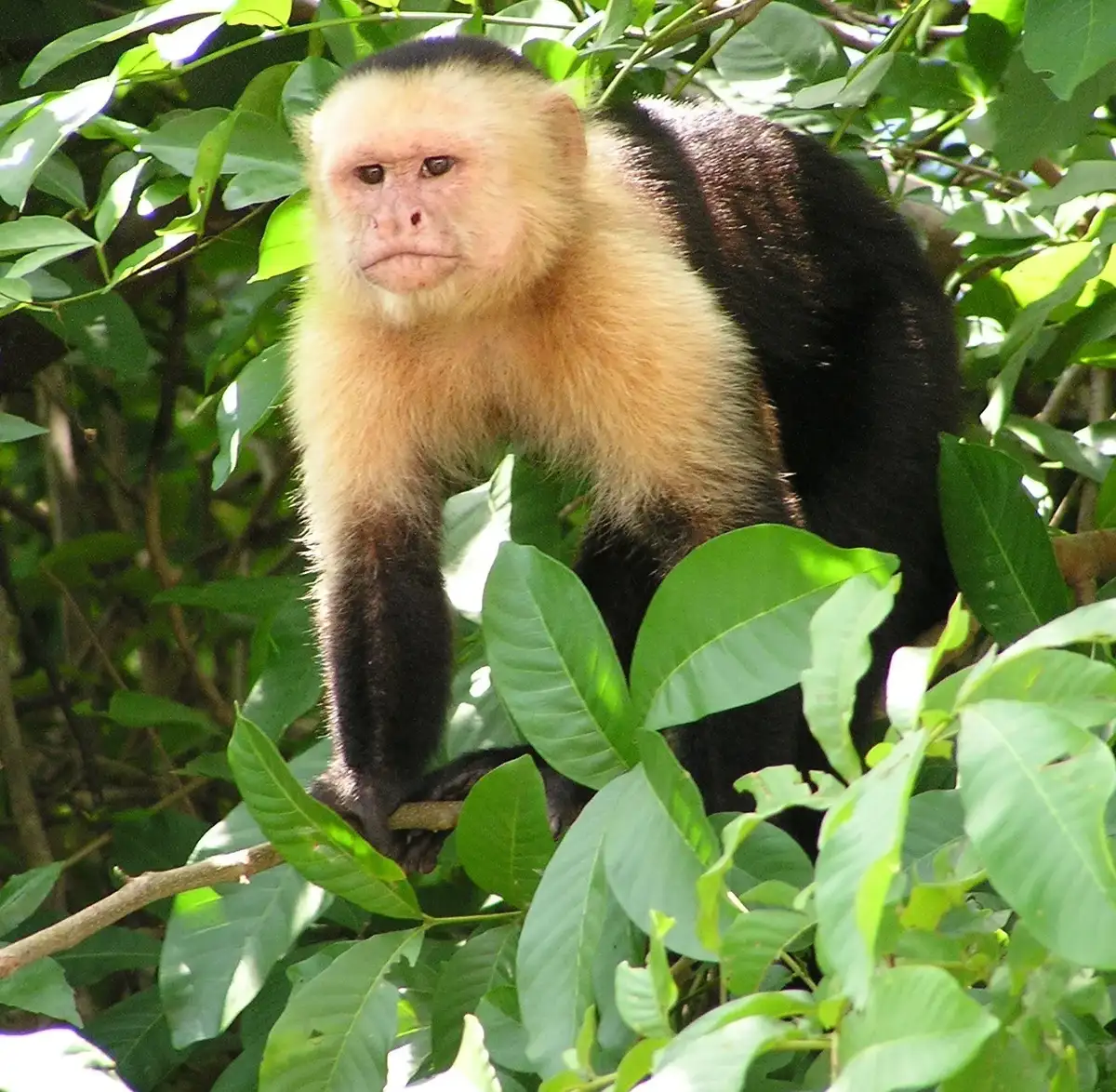
Almost every “monkey legal states” list on the internet is a copy of another list. They disagree with each other, they cite nothing, and several of them put the same state in two different columns on the same page. This one is built the other way round: every row below is tied to the statute or administrative rule we opened and read, and the sixteen rows we could not pin to primary text carry a visible Verify flag rather than a confident guess.
Last verified: 27 July 2026.
Status at a glance
| Status | Count | Jurisdictions |
|---|---|---|
| No route to a pet primate | 24 + DC | AK, AZ, CA, CO, CT, HI, IA, IL, KY, LA, MD, ME, MN, MT, NM, NY, OH, OR, PA, RI, WA, WV, WY, D.C. |
| Permit or registration available | 11 | AR, DE, FL, GA, IN, MA, MS, MO, ND, NH, NJ |
| No state permit (at least some monkeys) | 11 | ID, KS, MI, NC, NV, OK, SC, TN, TX, VA, WI |
| Could not confirm | 5 | AL, NE, SD, UT, VT |
Two structural points explain most of the confusion in this niche. First, “primate” is not one legal category — a large number of states regulate great apes and baboons far more harshly than they regulate a capuchin or a marmoset, and a list that reports one answer per state necessarily gets one of those wrong. Second, the binding layer is federal, and no state-by-state list we found mentions it at all.
The federal layer that no monkey list mentions
1. Since 1975, an imported primate may not lawfully be kept as a pet — anywhere
CDC’s quarantine regulation at 42 C.F.R. § 71.53 governs every nonhuman primate that enters the United States. Two sentences do the work. § 71.53(d)(1): “A person may not import live NHPs into the United States unless the person is registered with HHS/CDC as a NHP importer in accordance with this section.” And § 71.53(d)(3): “A person may not accept, maintain, sell, resell, or otherwise distribute imported NHPs (including their offspring) for use as pets, as a hobby, or as an avocation with occasional display to the general public.”
Read that second clause carefully, because it is broader than it first looks. It reaches “including their offspring”, and it binds the person who accepts or maintains the animal, not only the importer. The permissible uses are defined in § 71.53(c) and are limited to science, education and exhibition — exhibition meaning a public display at a facility meeting AZA accreditation standards. There is no pet category. The section credit line is [78 FR 11538, Feb. 15, 2013].
This is why the legally-kept pet monkeys in the United States are overwhelmingly domestically bred: the import channel has been shut to the pet trade for half a century.
2. Every chimpanzee in the country has been an endangered species since 14 September 2015
Captive chimpanzees used to be listed separately from wild ones. The U.S. Fish and Wildlife Service ended that split rule with “Endangered and Threatened Wildlife and Plants; Listing All Chimpanzees as Endangered Species”, 80 FR 34500, published 16 June 2015 and effective 14 September 2015 (verified against the Federal Register’s own record for that document). Once an animal is endangered, the Endangered Species Act’s prohibitions attach to selling it and to moving it in interstate commerce without a federal permit.
That is the real answer to “which state can I buy a chimp in.” The question is misdirected: the constraint is not the state line.
3. The bill that would federalise the whole question is still a bill
The Captive Primate Safety Act of 2025 (H.R. 3199, with a Senate companion at S. 1594) would amend the Lacey Act to treat nonhuman primates as prohibited wildlife species and end the private primate pet trade nationally. It was introduced on 5 May 2025 and referred to the House Committee on Natural Resources. As of this page’s verification date it has not been enacted, and versions of it have been introduced and died in multiple previous Congresses. Treat any page that describes a nationwide primate pet ban as current law as out of date — or as describing the bill rather than the law.
What the copied lists get wrong
Texas does not ban pet monkeys — it names four primates and stops
Texas has no master exotic-pet statute. Its dangerous-wild-animal regime, Tex. Health & Safety Code § 822.101(4), is a closed enumerated list, and its primate entries are individual items: (P) a baboon; (Q) a chimpanzee, followed by orangutan and gorilla. A capuchin, a marmoset, a squirrel monkey or a spider monkey is simply not on the list, so the certificate-of-registration regime in § 822.103 does not reach it. This matches what we found when we mapped the whole state in our Texas exotic pet law guide: Texas is permissive at state level and restrictive at county level.
Virginia’s regulation ends with a sentence that legalises everything it did not name
Virginia’s list of restricted nonnative animals is 4VAC15-30-40. We searched the entire rule for primate, monkey, chimpanzee, gorilla, macaque, lemur and marmoset and found none of them. Subsection (J) then says the quiet part out loud: “All other nonnative (exotic) animals not listed in subsection A of this section may be possessed, purchased, and sold; provided, that such animals shall be subject to all applicable local, state, and federal laws and regulations, including those that apply to threatened/endangered species.” That is an express permission, not an inference. (The same regulation is the one that bans Mustelidae “except Mustela putorius furo” — see our ferret legal states table.)
South Carolina’s 2018 law covers great apes only
South Carolina’s exotic-animal statute makes it “unlawful for a person to import into, possess, keep, purchase, have custody or control of, breed, or sell within this State, by any means, a large wild cat, non-native bear, or great ape, including transactions conducted via the Internet.” The covered primate group is defined as “Hominidae — all great apes; to include all species of chimpanzees, gorillas, and orangutans.” The word “monkey” does not appear anywhere in the chapter. Owners in lawful possession before 1 January 2018 were grandfathered.
Tennessee puts monkeys in the class that needs no permit at all
Tennessee’s five-class wildlife system at T.C.A. § 70-4-403 is usually reported as “Tennessee bans primates,” which is half right. Class I — restricted to zoos, circuses and commercial propagators — is defined to include “Primates — Gorillas, orangutans, chimpanzees, gibbons, siamangs, mandrills, drills, baboons, Gelada baboons.” But Class III, which “requires no permits except those required by the department of agriculture,” contains item (M): “Primates not otherwise listed.” A capuchin is Class III in Tennessee. A baboon is Class I.
Missouri is a registration state, not a free state
Missouri appears on permissive lists because it issues no exotic-pet permit. It does something else instead. Mo. Rev. Stat. § 578.023 makes it an offence to keep a “nonhuman primate” — the statute names it directly, alongside lions, tigers and bears — anywhere other than a zoo, circus, research laboratory, veterinary hospital or animal refuge unless the keeper has registered the animal with the local law enforcement agency in the county. No fee, no inspection, but a real and enforceable duty that “no permit required” lists never mention.
Ohio bans primates but expressly exempts lemurs
Ohio’s post-Zanesville law defines “dangerous wild animal” at Ohio Rev. Code § 935.01(C)(19) as “Nonhuman primates other than lemurs and the nonhuman primates specified in division (C)(20)” — and then (C)(20) separately enumerates a long list of New World monkeys (tamarins, night monkeys, titi monkeys, muriquis, Goeldi’s monkeys, sakis, uakaris, spider monkeys, woolly monkeys, howler monkeys), which are therefore also dangerous wild animals. § 935.02 is blunt: “No person shall possess a dangerous wild animal on or after January 1, 2014.” Lemurs are the one primate group the definition drops out, in both directions.
Idaho’s rule permits four species — and gets two of their scientific names backwards
Idaho is the most misreported state on this topic, and its rule contains a drafting error worth reading for yourself. IDAPA 02.04.27.407, titled “Deleterious Exotic Animals — Mammals: Non-Human Primates,” provides: “All non-human primates must be possessed on a facility that is AZA accredited. The following primate species are exempt from this rule:” and then lists four — Capuchin (Cebus spp), Marmoset (Saimiri spp), Spider Monkeys (Atleles spp), and Squirrel Monkeys (Callithrix, Cebuella, Callibella, and Mico spp).
Two of those are swapped: Saimiri is the squirrel monkey genus, and Callithrix, Cebuella, Callibella and Mico are marmoset genera. Atleles is a misspelling of Ateles. The practical effect is the same four kinds of small monkey either way, but anyone quoting Idaho’s rule as authority should quote it accurately — and anyone relying on the common names alone should be aware the Latin does not match them.
Monkey laws by state — all 50 states and D.C.
Read the status column together with the note: several states are legal for a marmoset and closed for a macaque, and the note is where that lives.
| State | Status | What the law actually says | Citation |
|---|---|---|---|
| Alabama | Unclear — Verify | The only Alabama rule we could read that names primates (chimpanzees, baboons, macaques as Class I wildlife) governs wildlife used for public exhibition, so it does not settle private pet possession either way | Ala. Admin. Code r. 220-2-.154 |
| Alaska | No pet route Verify | Closed “clean list” of animals possessable without a permit; primates are absent from it. A narrow grandfather exists for a chimpanzee held as a pet before 31 January 2010, and propagation of chimpanzees is prohibited | 5 AAC 92.029 |
| Arizona | No pet route | Restricted live wildlife includes “All nonhuman primates. Common names include: chimpanzees, gorillas, macaques, orangutans, and spider monkeys.” Possession requires a special licence or a lawful exemption — categories written for zoos and wildlife facilities, not households | Ariz. Admin. Code R12-4-406(A)(8) |
| Arkansas | Registration; apes closed | Apes, baboons and macaques cannot be newly acquired — owners who held them before 16 August 2013 register with the sheriff. Other primates remain lawful subject to the statute, which also provides that “It is unlawful for a person to allow a member of the public to come into direct contact with a primate.” | Ark. Code Ann. §§ 20-19-602 to -605 |
| California | Banned | The statute itself lists Class Mammalia, Order Primates — “All species except those in family Hominidae” as a restricted wild animal, and records that primates are restricted “for the welfare of the animals” — the (W) designation, not the (D) detrimental one. No pet permit category exists | Cal. Fish & Game Code § 2118; 14 CCR § 671 |
| Colorado | Banned | Prohibited wildlife list item 19: “All species and hybrids of non-human primates, except as authorized by § 35-80-108 C.R.S.” — a licensing carve-out, not a private pet route | 2 CCR 406-0-008(B)(19) |
| Connecticut | No new possession | Primates are “potentially dangerous animals.” The exemption is historic only: a “primate that weighs less than thirty-five pounds at maturity and that was imported or possessed by a person in this state prior to October 1, 2010” is not treated as potentially dangerous | Conn. Gen. Stat. § 26-40a |
| Delaware | Permit Verify | “No person shall bring into this State, possess, sell or exhibit any live wild mammal … not native to or generally found in Delaware without first securing a permit.” The statute does not name primates; they are swept in as non-native wild mammals | 3 Del. C. § 7201 |
| Florida | Permit (three tiers) | Class I — chimpanzees, gorillas, orangutans, gibbons, baboons (Papio) and gelada baboons (Theropithecus) — “shall not be possessed as a personal pet.” Class II (macaques, guenons, howlers, langurs, sakis, uakaris, mangabeys and more) needs a paid permit; everything else, including capuchins and marmosets, is Class III with a no-cost permit | Fla. Stat. § 379.3762; Fla. Admin. Code r. 68A-6.002 |
| Georgia | Wild animal licence Verify | The inherently-dangerous list names “Family Pongidae (gibbons, orangutan, chimpanzees, siamangs, and gorillas) — All species”, “Genus Macaca (macaques) — All species” and the gelada baboon; possession requires a wild animal licence. Whether unlisted small monkeys fall outside the licence entirely is not settled by the text we could read | O.C.G.A. §§ 27-5-4, 27-5-5 |
| Hawaii | Banned | “Animals in the order Primates shall not be allowed for import or possession for private or commercial use” other than research, zoo, university and sanctuary purposes determined by the board | Haw. Code R. § 4-71-6.5(b)(3) |
| Idaho | Four species only | All non-human primates must be held at an AZA-accredited facility, except four exempted species: capuchin, marmoset, spider monkey and squirrel monkey (see the drafting error noted above) | IDAPA 02.04.27.407 |
| Illinois | Banned | The broadest primate definition of any state: “a nonhuman member of the order primate, including but not limited to chimpanzee, gorilla, orangutan, bonobo, gibbon, monkey, lemur, loris, aye-aye, and tarsier.” Grandfather closed on 1 April 2011. One live exception: a person with a severe mobility impairment may possess a single capuchin obtained from and trained by a licensed non-profit | 720 ILCS 5/48-10 |
| Indiana | Permit framework Verify | Indiana classifies Cercopithecidae (baboons and monkeys) and Pongidae (chimpanzee, bonobo, gorilla) as exotic mammals, but we could not pin the wild animal possession permit rule that actually gates private possession of a primate | 312 IAC 9-3-18.5 |
| Iowa | Banned | “Dangerous wild animal” is defined at family level — callitrichidae, cebidae, cercopithecidae, cheirogaleidae, daubentoniidae, galagonidae, hominidae, hylobatidae, indridae, lemuridae, loridae, megaladapidae, tarsiidae — i.e. every primate group. Grandfather date 1 July 2007 | Iowa Code ch. 717F |
| Kansas | No state permit | Kansas’s exotic-animal statute defines “dangerous regulated animal” as big cats, bears and non-native venomous snakes — a closed list that does not include primates | K.S.A. 32-1301(d) |
| Kentucky | Banned | Inherently dangerous exotic wildlife, item (q): “Primates, nonhuman (Order Primates).” No ape/monkey split; exemptions run to AZA facilities and institutional holders. Animals legally held before 13 July 2005 may be kept for life without breeding or replacement | 301 KAR 2:082 § 4 |
| Louisiana | Closed since 2015 | Unlawful to import, possess, purchase or sell “all non-human primates.” Applications from people who had not previously held a permit were accepted only until 30 June 2015; thereafter permits issue only to renewing holders | La. Admin. Code tit. 76, § V-115 |
| Maine | Service capuchin only Verify | Maine regulates all species in the order Primates; the captive-wildlife rule allows a primate only where the applicant demonstrates a legitimate need for physical aid from the animal — in practice a trained capuchin service animal, not a pet. The underlying unrestricted-species list is published only as a PDF we cannot read | 12 M.R.S. § 12151; 09-137 C.M.R. ch. 7 |
| Maryland | Banned | Criminal prohibition naming “primate, including a lemur, monkey, chimpanzee, gorilla, orangutan, marmoset, loris, or tamarin.” Grandfather: lawful possession on or before 31 May 2006 | Md. Code, Crim. Law § 10-621 |
| Massachusetts | Permit Verify | Massachusetts works from an exempt list; primates are not on it, so they are “non-exempt” and “may not be imported, possessed, maintained … except by a person holding a current and valid licence or permit.” Whether such a permit is ever issued for a pet is not stated in the rule | 321 CMR 9.01 |
| Michigan | Monkeys unregulated Verify | Michigan’s Large Carnivore Act reaches only large cats and bears — no primate appears in it. Great apes are reached instead through endangered-species law. We found no Michigan statute regulating monkeys, which is a negative finding, not a permission | MCL 287.1102(f); MCL 324.36505 |
| Minnesota | Banned | Regulated animals include “all nonhuman primates, including, but not limited to, lemurs, monkeys, chimpanzees, gorillas, orangutans, marmosets, lorises, and tamarins.” “A person must not take possession of a regulated animal after January 1, 2005” | Minn. Stat. § 346.155 |
| Mississippi | Permit + insurance | Inherently dangerous wild animals include “Family Pongidae (gibbons, orangutan, chimpanzees, siamangs and gorillas)” and “Genus Macaca (macaques).” A permit requires substantial liability insurance before issuance | Miss. Code Ann. §§ 49-8-1 to -19 |
| Missouri | Local registration | Keeping a “nonhuman primate” outside a zoo, circus, laboratory, veterinary hospital or refuge is an offence “unless he or she has registered such animals with the local law enforcement agency in the county” | Mo. Rev. Stat. § 578.023 |
| Montana | Banned | Prohibited species, family by family: “Callitrichidae Family (Marmosets and Tamarins); Cebidae family (new world primates); Cercopithecidae family (old world monkeys); … Pongidae family (apes)” | Mont. Admin. R. 12.6.2215(4) |
| Nebraska | Unclear — Verify | Widely listed as one of the few states allowing monkeys with no permit. We could not confirm it: the captive wildlife rule we could read speaks generally of wild birds and wild mammals and never names primates, and we could not reach a definitions clause settling whether a non-native primate is “wildlife” at all | 163 Neb. Admin. Code ch. 4 |
| Nevada | No state permit | Nevada lists the species for which its permits and licences are not required, and the list includes, in as many words, “Monkeys and other primates.” The clearest express permission of any state | NAC § 503.140(1) |
| New Hampshire | Permit Verify | Primates appear in the controlled species table and require a Fish & Game permit; a grandfather clause runs to holders permitted in 1992 and continuously since. We could not extract the full species sub-list from the rule’s table markup | N.H. Code Admin. R. Fis 804 |
| New Jersey | Permit | Potentially dangerous species table lists the primate families together — Cebidae (New World monkeys), Cercopithecidae (Old World monkeys and baboons), Pongidae (apes) — with no ape/monkey split | N.J.A.C. 7:25-4.8 |
| New Mexico | Institutional only Verify | The statute is an enabling provision: possession of “any subhuman primate, skunk, raccoon, fox or other sylvatic carnivore may be regulated by regulation of the … department of health for the protection of public health and safety.” The operative departmental rule was not readable from here | N.M. Stat. Ann. § 77-18-1 |
| New York | Banned | New York’s “wild animal” definition is a closed list — it “includes, and is limited to” the listed orders, and item (1) is “Nonhuman primates and prosimians.” Possession of a wild animal is prohibited by § 11-0512. New York City adds its own layer | N.Y. ECL § 11-0103(6)(e)(1); § 11-0512 |
| North Carolina | No state law; county option | North Carolina has no state primate statute. It delegates: “A county may by ordinance regulate, restrict, or prohibit the possession or harboring of animals which are dangerous to persons or property.” Many counties have done exactly that — check locally before anything else | N.C. Gen. Stat. § 153A-131 |
| North Dakota | Licence Verify | Primates are non-traditional livestock in the licensed category, requiring a Board of Animal Health licence plus a certificate of veterinary inspection and import permit number to bring one in | N.D. Admin. Code art. 48.1-09 |
| Ohio | Banned (lemurs exempt) | “No person shall possess a dangerous wild animal on or after January 1, 2014”, and the definition captures all nonhuman primates other than lemurs. Holders who registered under the 2012 law keep their animals under a wildlife shelter permit | Ohio Rev. Code §§ 935.01(C)(19)–(20), 935.02 |
| Oklahoma | No permit found Verify | Oklahoma is routinely named as a no-permit state. We could not open any Oklahoma rule that names primates from this host, so we record it as an unverified negative finding rather than a citation. Great apes remain federally constrained | Okla. Admin. Code 800:25-25-3 (not readable) |
| Oregon | Permit; not a pet route Verify | “A person may not keep an exotic animal in this state unless the person possesses a valid State Department of Agriculture permit.” The rules split primates into Class 1 (great apes and larger catarrhines) and Class 2 (old world monkeys) with separate facility standards. Whether Oregon still issues new permits to private individuals is not stated in the text we read | ORS 609.341; OAR 603-011-0720 |
| Pennsylvania | Banned | One of the flattest bans in the country: unlawful to import, possess, sell, offer for sale or release “The order Primates. All families of nonhuman primates.” Unlike the cats and canids in the same list, item (7) carries no permit exception | 58 Pa. Code § 137.1(a)(7) |
| Rhode Island | Institutional only | “All exotic wild animals of the order Primates are expressly prohibited from importation or ownership without the issuance of a valid permit … Possession is restricted to bona fide researchers, USDA licensed exhibitors … and AZA certified facilities.” | 250-RICR-40-05-3 |
| South Carolina | Apes banned; monkeys unregulated | The 2018 chapter reaches “a large wild cat, non-native bear, or great ape”, defined as “Hominidae — all great apes.” Monkeys and prosimians are outside the chapter entirely. Grandfather date 1 January 2018 | S.C. Code Ann. tit. 47, ch. 2 |
| South Dakota | Unclear — Verify | The non-domestic mammal rules we reached use only generic language and never name primates, and the statute pages render as a JavaScript shell with no readable text from this host | ARSD 12:68:18 (not readable) |
| Tennessee | Class III — no permit | Class I (zoos and commercial propagators only) names the great apes, gibbons, siamangs, mandrills, drills and baboons. Class III, which “requires no permits except those required by the department of agriculture,” includes item (M): “Primates not otherwise listed.” | T.C.A. § 70-4-403(1)(A)(i), (3)(M) |
| Texas | Monkeys not listed | The dangerous wild animal list names only four primates individually — baboon, chimpanzee, orangutan, gorilla. Small monkeys are not on it, so no certificate of registration is required at state level. Counties and cities may prohibit them | Tex. Health & Safety Code § 822.101(4) |
| Utah | Unclear — Verify | Utah’s rule does not contain the classification itself: “The … classification table entitled Birds and Mammals Classification Table 3b-1, dated May 1, 2023 is incorporated by reference.” That table is published only as a PDF and the wildlife agency’s site refuses automated requests, so we cannot read Utah’s primate classification | Utah Admin. Code R657-3b-7 |
| Vermont | Unclear — Verify | Vermont’s legislature site was unreachable from this host on every attempt. We will not report a Vermont answer we could not read | — |
| Virginia | No state permit | No primate appears anywhere in Virginia’s restricted nonnative animal list, and subsection (J) expressly permits possession, purchase and sale of nonnative animals the rule does not name, subject to other law | 4VAC15-30-40(J) |
| Washington | Banned | “Potentially dangerous wild animal” includes “Order primates, all nonhuman primate species.” A possessor lawful before 22 July 2007 may keep that animal for the remainder of its life; no new possession is allowed | RCW 16.30.010(3)(a)(iii); RCW 16.30.030 |
| West Virginia | Grandfathered permits only | “a person may not possess a dangerous wild animal”; primates are a listed category, and the permit provision is written for an applicant who “was in legal possession of the animal prior to the effective date of the rules” | W. Va. Code §§ 19-34-4, 19-34-5 |
| Wisconsin | No state permit | Wisconsin’s complete harmful wild animals list is five families — Ursidae (bears), Felidae (cougars), Suidae (wild swine), Anatidae (mute swans) and Canidae (wolf-dog hybrids). No primate appears on it | Wis. Admin. Code NR 16.11 |
| Wyoming | Banned | “A permit shall not be issued for importation or possession of the following live warm-blooded wildlife in Wyoming … All members of the order nonhuman primates.” A pre-1973 household-pet exemption is cited by secondary sources; we could not find it in the rule and do not assert it | 040-10 Wyo. Code R. § 10-11(b)(iv) |
| Washington, D.C. | Banned | D.C. is a closed-list jurisdiction: no living member of the animal kingdom may be possessed “except the following” — dogs, cats, domesticated rodents and rabbits, cage birds, certain non-venomous reptiles and fish, ferrets and racing pigeons. Primates are not on the list | D.C. Code § 8-1808(j)(1) |
Why the ape/monkey split matters more than the state line
Group the pinned rows by what they regulate rather than by state and a clearer pattern appears than any map shows.
States that ban the whole order in one clause — Pennsylvania (“The order Primates. All families of nonhuman primates”), Kentucky (“Primates, nonhuman (Order Primates)”), Washington (“Order primates, all nonhuman primate species”), Wyoming (“All members of the order nonhuman primates”), Hawaii, Colorado and Arizona — leave no room for the “but mine is only a marmoset” argument. Iowa, Illinois, Maryland and Minnesota get to the same place by listing the families or the common names exhaustively; Illinois’ definition even reaches the aye-aye and the tarsier.
States that ban only the big ones — Texas (four named species), South Carolina (Hominidae), Tennessee (Class I), Georgia and Mississippi (Pongidae plus Macaca), Florida (Class I) — reflect a public-safety judgment about bite force and adult size rather than a view about primates in general. In those states the question “is a monkey legal here” has no single answer, which is precisely why single-answer lists are unreliable.
And one state exempts by species. Idaho’s four-species exemption (capuchin, marmoset, spider monkey, squirrel monkey) is the only rule of its kind we found: a state that regulates all primates to AZA facilities and then names four small monkeys as the exception.
What a “permit state” actually means
Eleven states have a permit or registration a private person can in principle obtain, but the mechanisms differ so much that grouping them is almost misleading:
- Registration, no fee, no inspection — Missouri (sheriff or police chief) and Arkansas (sheriff, for grandfathered apes).
- A real permit with substantive conditions — Florida’s tiered permits, New Jersey’s potentially-dangerous-species permit, North Dakota’s non-traditional livestock licence, New Hampshire’s Fish & Game permit.
- A permit gated by money — Mississippi requires liability insurance before issuance, which is the practical barrier rather than the fee.
- A permit that exists on paper — Massachusetts and Delaware regulate primates through a general non-exempt/non-native permit whose issuance criteria for pets are not stated in the rule. Treat “permit available” as “ask the agency,” not as “yes.”
For how these systems are structured generally, see our guide to exotic pet permits and licences and the glossary of terms like “inherently dangerous animal” and “restricted species.”
What we could not confirm
Sixteen rows above carry a Verify flag. The five states with no answer at all are:
- Alabama — the only readable rule naming primates governs public exhibition, not private possession.
- Nebraska — widely reported as permissive; the captive-wildlife rule never names primates and we could not reach the definition that would settle it.
- South Dakota — the statutes render as a JavaScript shell with no text; the administrative rules use only generic “non-domestic mammal” language.
- Utah — the classification table is incorporated by reference as a PDF, and the wildlife agency’s site refuses automated requests.
- Vermont — the legislature’s site was unreachable on every attempt.
The other flagged rows are ones where we could read a framework but not the exact provision that decides a pet case: Alaska, Delaware, Georgia, Indiana, Maine, Massachusetts, Michigan, New Hampshire, New Mexico, North Dakota, Oklahoma and Oregon. If you know the controlling citation for any of these, send it to us — corrections are published with the source.
Frequently asked questions
Which states allow monkeys with no permit at all?
On the text we could read: Kansas, Nevada, North Carolina (state level), South Carolina (monkeys only), Tennessee (Class III primates), Texas (monkeys only), Virginia and Wisconsin, plus Idaho for its four exempted species and, on an unverified negative finding, Michigan and Oklahoma. Nevada is the only one that names primates on an express “no permit required” list; the rest are negative findings, meaning no state rule reaches them. Local ordinances are a separate question everywhere.
Can I own a chimpanzee anywhere in the US?
Not as a pet, in practice. All chimpanzees have been listed as endangered under the Endangered Species Act since 14 September 2015, which brings federal permit requirements to sale and interstate movement, and imported primates cannot be kept as pets at all under 42 C.F.R. § 71.53(d)(3). On top of that, chimpanzees are individually named in the strictest tier of most state laws — Florida Class I, Tennessee Class I, Texas’ four-species list, South Carolina’s Hominidae ban.
Are capuchins treated differently from other monkeys?
Frequently, yes — and in both directions. Idaho exempts capuchins by name; Florida puts them in the lightest permit class; Illinois, which otherwise bans every primate, allows a single capuchin for a person with a severe mobility impairment where the animal comes from a licensed non-profit; Maine allows a primate only on a demonstrated need for physical aid. Capuchins are the species the service-animal exceptions were written around.
Does a state “legal” answer mean my city allows it?
No, and this is the most common way people get caught. North Carolina delegates the entire question to counties. Texas lets counties and cities prohibit dangerous wild animals outright. New York State’s rules and New York City’s rules diverge sharply, as we found when mapping ferret law in New York and NYC. Always check the municipal code as well as the state code.
What about lemurs — are they monkeys?
Biologically they are prosimians, not monkeys, and several statutes track that distinction. Ohio expressly excludes lemurs from its dangerous wild animal definition. New York, by contrast, closes the gap deliberately: its list reads “Nonhuman primates and prosimians.” Maryland, Minnesota and Illinois all name lemurs directly. If you are researching a lemur, read the statute’s own words rather than assuming either way.
Sources
Federal: 42 C.F.R. § 71.53 (CDC importation of nonhuman primates); Federal Register record for Listing All Chimpanzees as Endangered Species, 80 FR 34500 (published 16 June 2015, effective 14 September 2015); H.R. 3199, Captive Primate Safety Act of 2025 (introduced 5 May 2025, referred to House Natural Resources).
States: statute and administrative-code text as cited in each row, read from state legislature and agency sites, the Cornell Legal Information Institute state-regulation mirrors, FindLaw’s state code mirrors, the Florida Administrative Code, the D.C. Council code and Michigan State University’s Animal Legal & Historical Center. Every quoted sentence in this page was matched against the fetched document text, not against a search-result snippet.
Method and correction policy: Editorial & Sourcing Policy.
This page states what statutes and regulations say; it is not legal advice, and primate law changes faster than most exotic-pet law. Verify with your state wildlife or agriculture agency and your city or county before acquiring any animal. Last verified 27 July 2026.
More from the species database: ferret legal states, raccoon legal states, skunk legal states, hedgehog legal states. Browse the full exotic pets A–Z or start from your state — including the two biggest, California and Texas.